The most thoughtful teacher gift ideas start with something you already know about the teacher: a love of birds, a fondness for gardening, or a favourite classroom story. Choose one small gift that fits that interest, add a note in your child’s own words, and check the school’s gift policy before buying.
You do not need a grand gesture to mark the end of term. A modest felt friend can be a cheerful thank-you, but a card on its own is a lovely choice too. The aim is to recognise something specific the teacher has done, without making giving feel like another school obligation.
Start with the school policy and a comfortable limit
Before choosing anything, look for the school’s guidance on gifts. There may be a value limit, restrictions on individual presents, or a preference for cards or shared class gestures. If the guidance is unclear, ask the school office rather than putting the teacher on the spot.
Then decide what feels comfortable for your family. There is no need to match another parent’s present, organise a collection or buy for every adult in the same way. A sincere note is a complete thank-you, not a fallback.
- Check whether gifts are permitted and whether any conditions apply.
- Ask whether the class is already arranging something, without feeling obliged to join.
- Let your child help choose within a small selection you are happy with.
- If presents are discouraged, put the thought into a drawing or letter instead.
Teacher gift ideas guided by interests you already know
A familiar interest gives a small present a clear reason. Use something the teacher has shared openly or something your child remembers from class; there is no need to investigate their private life.
For a teacher who enjoys gardening
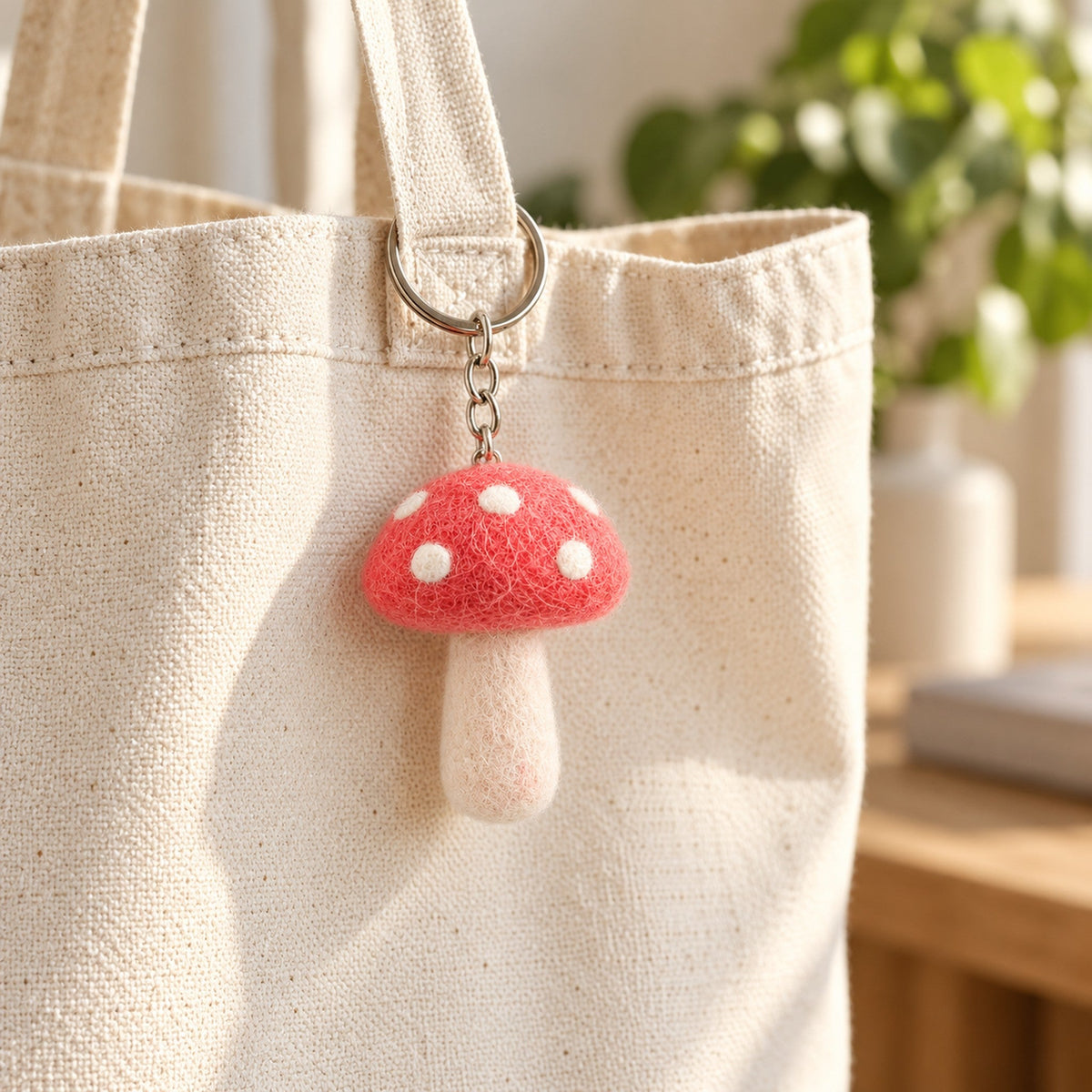
Blossom Toadstool is a bag charm with a coral-pink cap and white spots. It could suit someone who talks fondly about their garden or has helped the class grow plants. Let your child explain that connection in the card.
For someone who notices the birds
Little Finch is a hanging ornament with olive-green wings and a rusty red cap. Choose it for a teacher whose interest in birds you already know, perhaps through a classroom nature activity.
For a teacher who enjoys imaginative stories
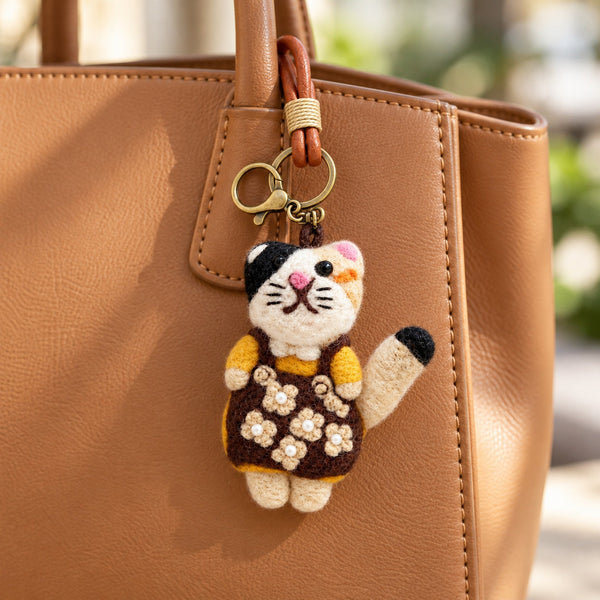
Acorn the Pixie is a little felt pixie bag charm with a stitched smile. It is a playful choice if fairy tales or woodland adventures have been a memorable part of the term.
For a simple classroom thank-you
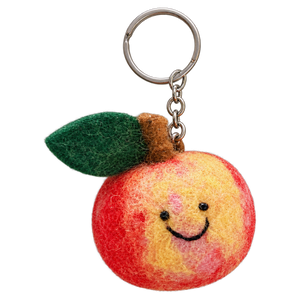
Big Red Apple is a smiling red apple keychain with a dark green leaf. If you do not know a particular hobby, it offers a straightforward school-themed choice without guessing at personal tastes.
 Blossom Toadstool
 Little Finch
 Acorn the Pixie
 Big Red Apple
Choose a format that fits, without creating a job
Think about how the teacher might use the gift, but leave that decision to them. A present should not arrive with an expectation that it will be worn, displayed in the classroom or attached to a particular bag.
- Keychain: a key ring with a short chain, useful if you know the teacher likes a cheerful addition to their keys.
- Bag charm: a metal clip with a beaded or coloured cord, suited to someone who already enjoys decorating a bag.
- Hanging ornament: a string loop for someone who likes small hanging decorations.
Most friends are about 8 to 12 cm, so consider whether that size suits the intended use. Check the individual listing for the available format rather than assuming every design comes in every option. The keychain, bag charm or ornament guide can help you compare.
Help your child write the part that matters most
A note makes the connection between the gift and the person. Ask your child what they remember, then give them space to answer. One genuine detail is more meaningful than a long message filled with general praise.
Try these prompts as starting points, not a script to copy:
- What did your teacher help you understand or practise?
- Which classroom activity would you like to remember?
- Was there a moment when your teacher helped you feel included?
- Why did you choose this particular friend for them?
Younger children can draw a remembered activity and add their name. If writing is difficult, an adult can write down the child’s own words and let them add a picture. Keep their natural phrasing rather than polishing it into an adult message.
There is no need to explain the gift’s cost or apologise for its size. Simply connect the choice to a memory and say thank you.
Keep the handover simple and make a small tradition
Place the charm with the card and make sure your child’s name is easy to find. Follow any school arrangements for handing in presents. A quiet thank-you is enough; there is no need for a public presentation or an immediate reaction.
If your child feels shy, they can hand over the card without a speech. Avoid asking the teacher to open the gift in front of everyone or pose for a photograph.
For a gentle end-of-term tradition, invite your child to draw one thing they learned and name one thing they enjoyed. That reflection can accompany a little gift when appropriate, or stand alone in years when a present does not suit. The tradition is noticing and thanking, not buying.
Questions and answers
Should we buy an individual gift if there is a class collection?
There is no need to do both. Choose what suits your family and the school’s policy; a personal note can accompany a shared class gift without adding another present.
What if we do not know the teacher’s interests?
Avoid guessing at personal tastes. Choose a simple school-themed friend if gifts are permitted, or let your child’s card focus on a classroom memory.
Is a card enough for an end-of-term thank-you?
Yes. A child’s drawing or a few specific words of thanks can express appreciation without any accompanying gift.